Blog
Top Ceiling Fans in Pakistan: The Complete Buying Guide for 2026

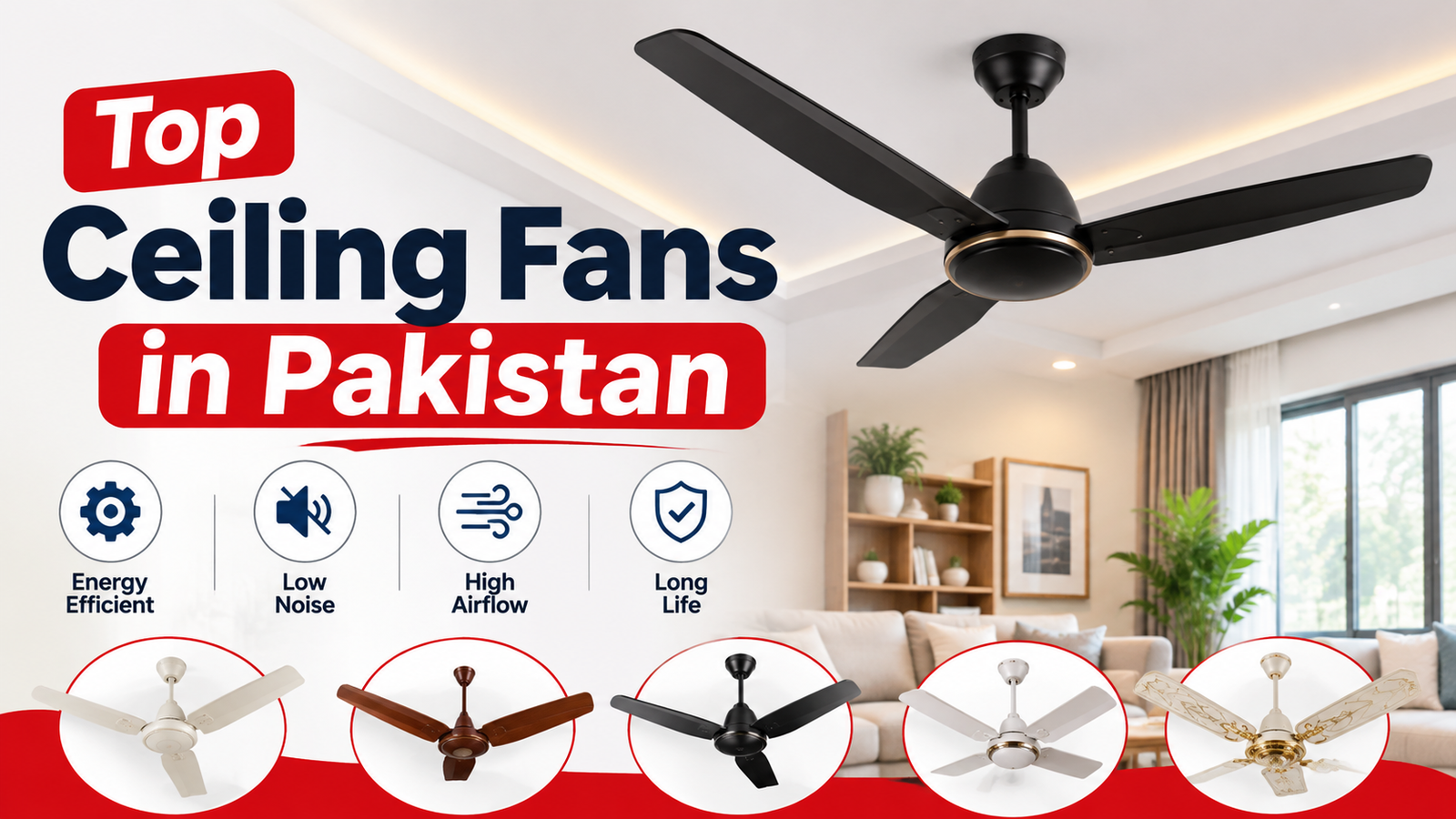
Pakistani summers are long, hot and, for many households, full of load-shedding and rising electricity bills. In that kind of climate, a ceiling fan is not a luxury. It is the most-used appliance in the house, often running ten or more hours a day from April to October. Yet most people still buy a fan the way their parents did: pick a familiar brand, check the sweep size and hope for the best.
That approach is getting expensive. A conventional ceiling fan can draw 75 to 120 watts, and when you run several of them all day, the cost adds up fast. The good news is that fan technology has moved on. Energy-efficient inverter, AC/DC and BLDC fans now deliver the same or better airflow for a fraction of the electricity, and they work well with solar systems and UPS backups too.
This guide explains what to look for, which types of ceiling fans make sense in Pakistan, and which models from Fusion Fans are worth a look if you want a modern, energy-saving fan at a sensible price.
Why Choosing the Right Ceiling Fan Matters in Pakistan
A fan is a long-term purchase. A well-built one runs for a decade or more, so a poor choice keeps costing you every month. Three things make the decision more important here than in many other countries.
Electricity costs. Unit rates have climbed steadily, and slab-based billing means that a few extra units can push a household into a higher bracket. A fan that uses 30 to 60 watts instead of 100 or more can noticeably change your bill over a summer.
Power instability. Many homes rely on UPS systems, inverters or solar panels. Fans that draw less power run longer on the same battery, which matters a great deal during outages.
Heat and humidity. From the dry heat of Punjab and Sindh to the humidity of Karachi, a fan has to cope with long hours of continuous use. Cheap motors overheat, hum and lose speed over time.
Choosing carefully is therefore not about luxury. It is about comfort, savings and avoiding a replacement in three years.
Types of Ceiling Fans Available in Pakistan
Before comparing models, it helps to understand the main technologies on the market.
1. Conventional AC ceiling fans
These are the traditional fans most of us grew up with. They run directly on mains alternating current, use a copper or aluminium winding, and are controlled by a regulator. They are the cheapest to buy but the most expensive to run, typically consuming 75 to 120 watts at full speed. They also tend to be noisier and lose speed when voltage drops.
2. Inverter ceiling fans (AC/DC)
Inverter fans use a DC motor with a built-in converter, so they accept normal AC supply but run on efficient DC power internally. They consume far less electricity, run quietly and keep steady speed even when voltage fluctuates. Many AC/DC models can also be connected directly to solar panels or battery systems, which is a big advantage in Pakistan.
3. BLDC ceiling fans
BLDC stands for brushless direct current. These fans use an electronically controlled motor with no brushes to wear out, which means lower power consumption, smoother operation and a longer lifespan. If you want to understand the technology in more depth, Fusion Fans has a helpful explainer on what BLDC ceiling fans are and why they are becoming popular.
4. Smart and WiFi fans
The newest category adds app control, scheduling and speed adjustment from your phone. One Fusion Fans customer describes their WiFi fan as silent, smooth and powerful. If you like the idea of controlling your fan remotely, see the AC/DC WiFi range.
What to Look for Before You Buy
Here are the factors that actually matter when comparing ceiling fans.
Power consumption
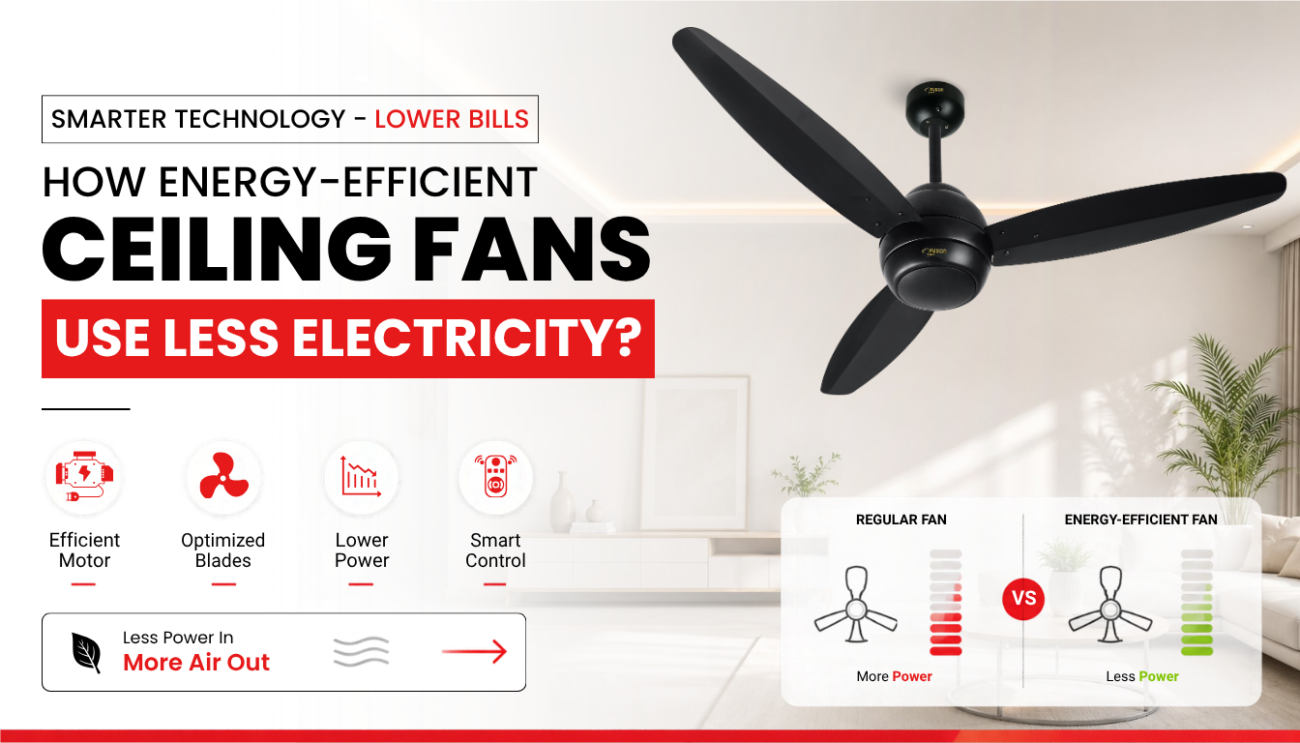
This is the single biggest factor in long-term cost. Check the wattage at full speed, not just the marketing claim. Eco-focused models run at around 30 watts, while standard inverter fans sit at around 60 watts. Compare that to the 100-plus watts of an older fan and the difference is clear. Fusion Fans lists its Eco-Smart range at 30 watts and claims energy savings of up to 70 percent compared to conventional fans, a figure worth testing with your own usage.
Air delivery
Air delivery, measured in cubic metres per minute, tells you how much air the fan really moves. A fan can look impressive and still deliver weak airflow. Higher air delivery at lower wattage is what you want.
Noise level
A fan running all night should not be audible. Look for quiet motors and well-balanced blades. Quality inverter and BLDC fans are generally much quieter than older AC fans, with some manufacturers quoting noise at or below 50 decibels.
Motor quality and warranty
The motor is the heart of the fan. Ask what it is made of, whether the bearings are sealed, and what warranty is offered. A long warranty is a sign that the manufacturer trusts its own build quality. Fusion Fans advertises a 3-year warranty on its Eco Smart fans, and you can read the process on its warranty claim page.
Size and blade design
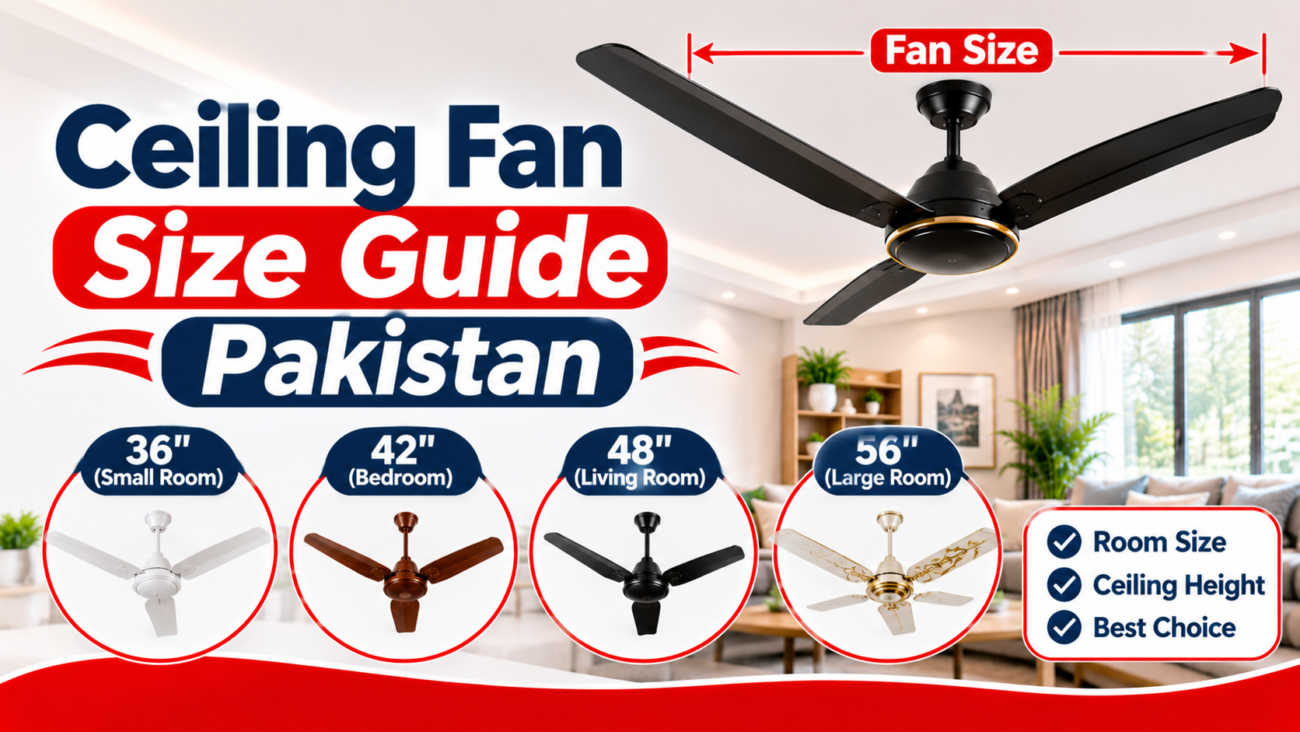
Match the sweep to the room. As a rough guide, a 48-inch fan suits most bedrooms and small rooms, while larger lounges and halls can use 56 inches or more. Blade pitch and shape affect both airflow and noise.
Design and finish
Fans are visible every day, so finish matters. Black, wood, gold, cream and white options let you match your interiors rather than settle for a plain white fan.
If you want a deeper checklist, this article on how to choose the best ceiling fan for your home walks through the decision step by step.
Top Ceiling Fan Picks in Pakistan
The list below focuses on AC/DC inverter ceiling fans from Fusion Fans, a Pakistani manufacturer whose parent company, Rafique & Sons, has been building fans since 1995. Prices were listed on the website at the time of writing and may change, so check the product page before ordering.
1. Flash Model AC/DC Ceiling Fan: best budget inverter fan
Price at time of writing: Rs. 11,200.
If you want to move from a conventional fan to an inverter without a big jump in budget, the Flash Model is the natural starting point. It is the most affordable fan in the AC/DC line-up and comes in black, black-gold, cream dark wood and white, so it fits most rooms. It is a sensible choice for bedrooms, kids’ rooms and rented homes where you want savings without overspending.
2. Havel Model AC/DC Ceiling Fan: best for elegant interiors
Price at time of writing: Rs. 11,950.
The Havel Model comes in black-gold and cream-gold finishes, which suit living rooms and dining areas where the fan is part of the décor. It sits close to the Flash in price but adds a more decorative look, and it carries a perfect rating on the website. A good pick if you want style and efficiency together.
3. Spark Steel Black Model: best value in a premium finish
Price at time of writing: Rs. 15,800.
The Spark Steel Black offers a sleek steel-and-black look that works in modern homes and offices. It sits in the middle of the range, making it a good step up if you want a more premium appearance without paying top-tier prices. There is also a Spark Steel Wood variant for those who prefer a warmer look.
4. Brave Steel Black Model: best for modern living rooms
Price at time of writing: Rs. 17,000.
The Brave Steel Black has a bold, contemporary design and a five-star rating on the site. If you are setting up a new living room or lounge and want a fan that looks deliberate rather than an afterthought, this is a strong candidate. Prefer natural tones? The Brave Wood Model is available in dark and light wood at Rs. 17,800, and the Brave Steel Wood offers another take on the same design.
5. Elite Model AC/DC Ceiling Fan: best for colour choice
Price at time of writing: Rs. 17,800.
The Elite Model comes in black, black-gold and cream dark wood. It is a versatile option for homeowners who are particular about colour coordination, and it also holds a five-star rating on the website.
6. Hunter Black and Hunter Wood Models: best for large rooms and statement looks
Prices at time of writing: Rs. 18,200 (Black) and Rs. 19,800 (Wood).
At the top of this selection are the Hunter Black Model and the Hunter Wood Model. They are the most design-forward fans in the range, aimed at spacious lounges, master bedrooms and commercial spaces where the fan needs to make an impression. The Wood variant comes in dark wood-black and light wood-black combinations.
Quick comparison
| Model | Price (Rs.) | Best for |
|---|---|---|
| Flash | 11,200 | Budget-friendly inverter upgrade |
| Havel | 11,950 | Decorative interiors |
| Spark Steel Black | 15,800 | Premium look, mid-range price |
| Brave Steel Black | 17,000 | Modern living rooms |
| Brave Wood | 17,800 | Warm, natural tones |
| Elite | 17,800 | Colour flexibility |
| Hunter Black | 18,200 | Large rooms, bold design |
| Hunter Wood | 19,800 | Statement piece |
You can browse the full range, including all 51 ceiling fan products, on the Fusion Fans ceiling fans page.
Eco-Smart 30 Watt Fans: The Real Money Savers
If your priority is cutting your electricity bill rather than choosing between finishes, look at the Eco-Smart 30 Watt range. These fans are designed to run on just 30 watts, compared with roughly 120 watts for a typical conventional fan.
The maths is straightforward. According to figures published by Fusion Fans, a conventional fan costs about Rs. 3,240 per month to run in their example scenario, against about Rs. 1,080 for an Eco-Smart fan. Your actual savings will depend on your tariff, hours of use and the fan you are replacing, but the direction is clear: lower wattage means lower bills, and the savings multiply with every fan in the house.
A household with five fans running ten hours a day can save a meaningful amount over a single summer, and even more over the 3-year warranty period. Fusion Fans also offers an online savings calculator on its homepage where you can enter your fan type, number of fans, daily hours and electricity rate to see an estimate of monthly and yearly savings.
To understand the broader picture, read the article on how energy-efficient ceiling fans can help reduce electricity consumption.
AC/DC Fans and Solar: A Natural Pairing
Solar adoption has grown quickly across Pakistan, and fans are one of the first appliances people want to run from their panels. Low-wattage inverter fans suit this setup well because they place a small load on the system, which means you can run more fans from the same inverter or battery bank, and run them for longer during an outage.
If you are planning a solar or UPS setup, choose from the AC/DC inverter category. If your home has stable grid power and you simply want a reliable fan, the AC-220V range is worth checking as well.
How to Pick the Right Fan for Each Room
Bedrooms. Prioritise quiet operation and low wattage because the fan runs through the night. A mid-range inverter such as the Flash or Havel is usually ideal.
Living rooms. Here, design counts as much as performance. The Brave, Elite and Hunter models give you a finish that complements furniture and lighting.
Kitchens and bathrooms. Ceiling fans are not the right tool for removing steam and cooking smells. Use dedicated exhaust fans instead.
Terraces, lawns and open areas. Consider pedestal fans or bracket fans, which can be moved or wall-mounted where a ceiling fan is not practical.
Offices and shops. Choose durable, quiet fans with steady speed. Inverter models handle long working hours without overheating.
Installation and Maintenance Tips
Even the best fan underperforms if it is installed or maintained badly.
- Check the ceiling height. Ideally the blades should be around 8 to 9 feet from the floor. For lower ceilings, use a down-rod or a fan designed for low clearance.
- Use a proper hook and box. The ceiling hook must support the fan’s weight and vibration. This is a safety issue, not just a quality one.
- Balance the blades. A wobbling fan signals unbalanced blades or loose screws and will wear the bearings faster.
- Clean regularly. Dust on the blades adds weight and reduces airflow. Wipe them every month during peak season.
- Use the right regulator. Inverter fans usually come with their own remote or controller. Using an incompatible regulator can damage the motor.
- Run the fan in the right direction. In summer, most fans should push air downward to create a cooling breeze.
Common Mistakes Buyers Make
Choosing on price alone. The cheapest fan often costs the most over its life. A Rs. 5,000 difference at purchase can be recovered in one or two summers of lower bills.
Ignoring wattage. Many shoppers focus on speed and size and never look at power consumption. That is where the real long-term cost sits.
Skipping the warranty details. A warranty is only useful if the company honours it. Look for clear claim procedures and local support.
Forgetting delivery and returns. Buying online is convenient, but check shipping and return terms first. Fusion Fans offers free nationwide shipping on orders over Rs. 15,000, and its delivery and return, shipping and refund policies are published openly, including a 50-day return window.
Why Buy from a Local Manufacturer
Buying from a Pakistani manufacturer has practical advantages: spare parts are easier to find, service is closer, and the product is designed with local voltage conditions and climate in mind. Fusion Fans positions itself as a designer fan manufacturer with a legacy dating back to 1995 through its parent company, Rafique & Sons, and it also exports internationally. You can learn more on the About Us page and view its certifications and recognitions.
If you want to compare specifications offline or share them with an electrician or interior designer, the brand also provides an e-catalogue.
Frequently Asked Questions
Which ceiling fan is best in Pakistan? There is no single best fan for everyone. For lowest running cost, an Eco-Smart 30 watt or inverter fan is hard to beat. For design, models such as Brave, Elite and Hunter stand out. For budget, the Flash is a strong entry point.
Are inverter ceiling fans worth the extra cost? Usually yes. The higher purchase price is typically recovered through lower electricity bills, especially if you run fans for long hours or use several at once.
Can inverter fans run on solar or UPS? Many AC/DC fans are designed to work well with solar and battery setups because of their low power draw. Check the specific model details before connecting it to your system.
How much electricity can I save? It depends on your current fan, usage hours and tariff. Fusion Fans claims up to 70 percent energy savings for its Eco-Smart range, and its online calculator can give you a personal estimate.
What size ceiling fan should I buy? A 48-inch fan suits most standard bedrooms. Larger rooms may need 56 inches or more.
Can I order online? Yes. You can order through the Fusion Fans shop or contact the team through the contact page. Order tracking is available on the order tracking page.
Final Thoughts
A ceiling fan should keep you comfortable, not quietly inflate your electricity bill. As tariffs rise and solar becomes mainstream, the case for efficient inverter, AC/DC and BLDC fans gets stronger every year. Think about wattage, airflow, noise, warranty and finish together, rather than choosing on price or looks alone.
If you are ready to upgrade, explore the full Fusion Fans collection, compare models side by side, and pick the fan that suits your room, your budget and your power setup. Your future electricity bills will thank you.
Prices and specifications mentioned in this article were taken from the Fusion Fans website at the time of writing and may change. Always confirm current details on the product page before purchasing.