Blog
30 Watt Inverter Fan in Pakistan — How Much Electricity Does It Really Save?

Introduction
If your electricity bill keeps climbing every summer, a 30 watt inverter fan Pakistan buyers are now searching for may be the simplest upgrade in your home. A ceiling fan runs ten hours or more a day from April to October, often in every room at once. The difference between a fan that uses 120 watts and one that uses 30 watts is the difference between a bill that hurts and a bill you can manage.
What Is a 30 Watt Inverter Fan?
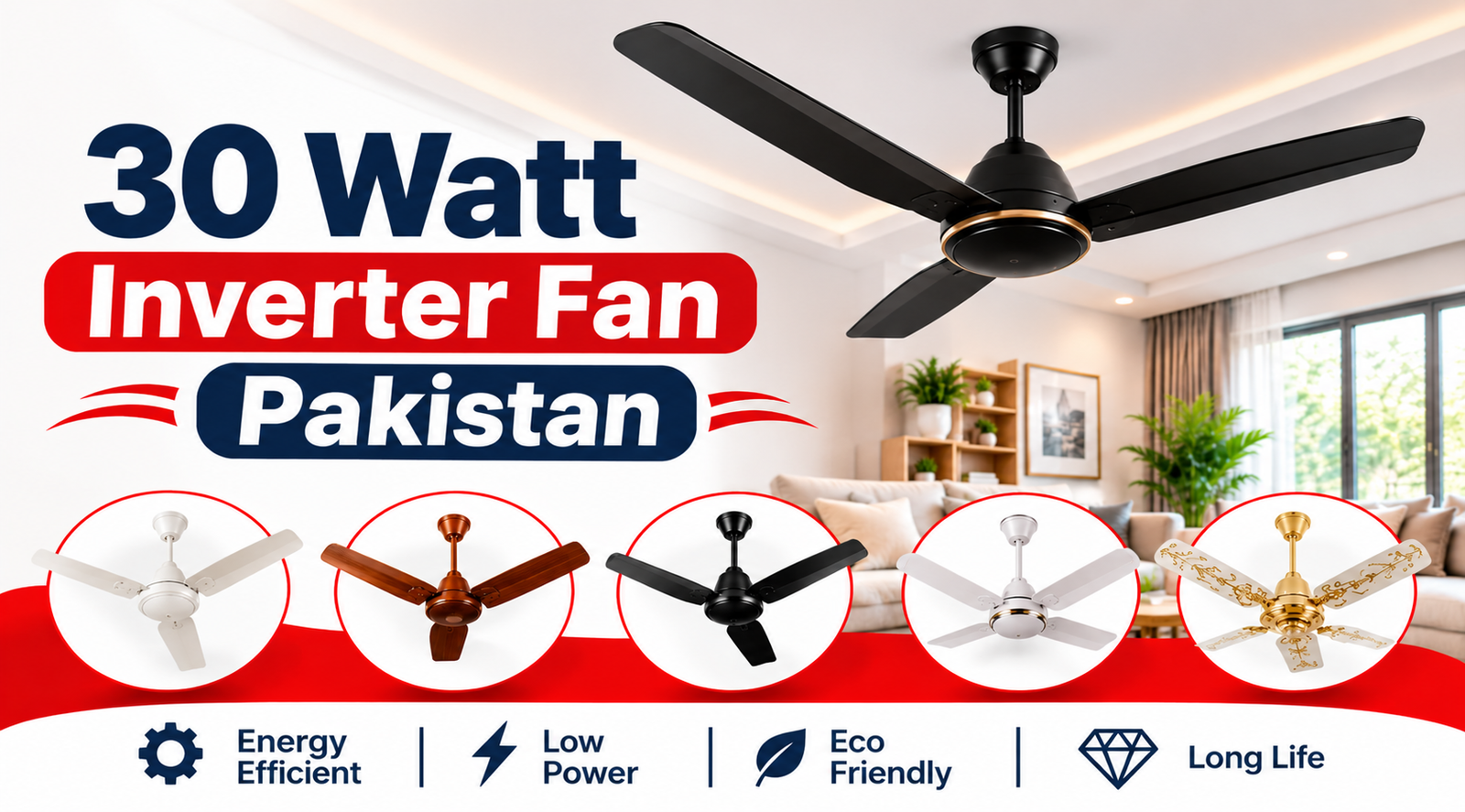
A 30 watt inverter fan is a ceiling fan designed to run on about 30 watts at full speed, using an electronically controlled motor instead of the older motor in a conventional fan. In Pakistan, most of these fans are also called BLDC fans.
BLDC fan kya hota hai?
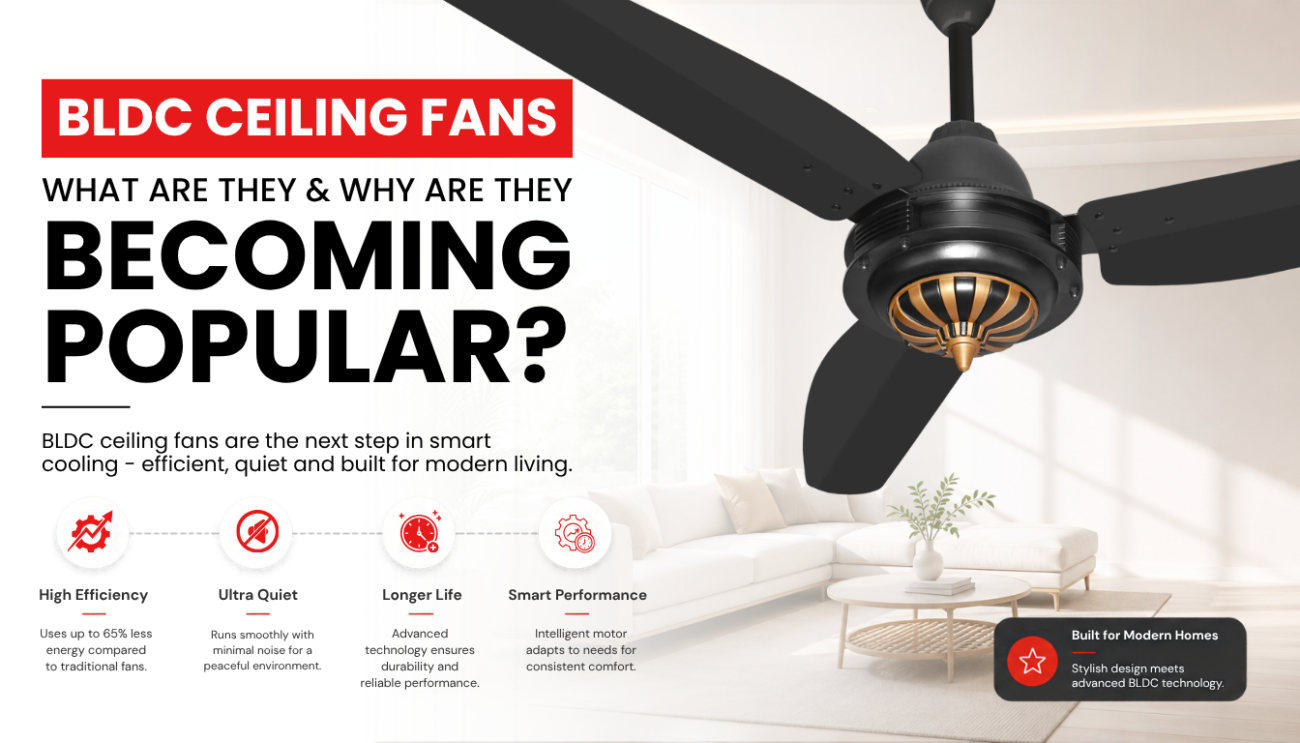
BLDC stands for Brushless Direct Current. A BLDC ceiling fan Pakistan shoppers see in shops uses a brushless motor with electronic controls instead of brushes that wear out, so it runs more smoothly, more quietly and with less wasted energy.
A conventional fan wastes much of its electricity as heat and noise. A BLDC fan converts more of what it draws into airflow. Fusion Fans’ Eco Smart models are rated at 30 watts, and Fusion Fans states they can save up to 70% energy compared with a conventional fan.
How Many Watts Does a Normal Ceiling Fan Use?
Ceiling fan kitne watt leta hai?
A conventional ceiling fan in Pakistan typically uses between 75 and 120 watts; Fusion Fans uses 120 watts in its homepage comparison. A 30 watt inverter fan is rated at 30 watts — one quarter of 120 watts.
| Feature | Conventional fan | Fusion Eco Smart fan |
|---|---|---|
| Power consumption | 120 Watt | 30 Watt |
| Monthly cost in Fusion’s example | PKR 3,240 | PKR 1,080 |
| Air delivery | 180 m3/min | 260 m3/min |
| Noise level | 65 dB | ≤ 50 dB |
These are Fusion Fans’ homepage figures. Note two surprises: the Eco Smart fan is shown as using less power yet delivering more air (260 against 180 cubic metres per minute), and as quieter (up to 50 decibels against 65).
The Bill Maths: How Much Do You Actually Save?
Inverter fan se bijli kitni bachti hai?
Fusion Fans publishes one worked example on its homepage: a conventional fan costs PKR 3,240 per month to run, and an Eco Smart fan costs PKR 1,080 per month — a saving of PKR 2,160 per month for one fan.
| Item | Amount in Fusion’s example |
|---|---|
| Conventional fan, monthly cost | PKR 3,240 |
| Eco Smart 30 watt fan, monthly cost | PKR 1,080 |
| Saving per fan, per month | PKR 2,160 |
| Saving per fan, per year, in that example | PKR 25,920 |
The yearly figure is simple arithmetic: PKR 2,160 × 12 = PKR 25,920.
That example uses one set of assumptions about hours and tariff. Your actual saving depends on your tariff, hours of use, and how many fans you replace. Do not read PKR 2,160 as a promise — read it as the scale of the difference. Try your own numbers in the Fusion Fans savings calculator
UPS and Battery Runtime
A fan that uses less power also lasts longer on backup, because the battery drains more slowly.
30 watt fan UPS par kitne ghante chalega?
There is no single answer, and any article giving one exact number for every home is guessing. Runtime depends on your battery’s size and age, your UPS or inverter’s efficiency, and what else runs from the same backup.
The maths is simple. A 30 watt fan uses 30 watt-hours per hour; a 120 watt fan uses 120 watt-hours per hour — four times as much for the same hour of cooling. In theory the same battery lasts roughly four times as long with the 30 watt fan, before losses. In practice inverters lose energy as heat and batteries lose capacity as they age. Replace the bedroom fan first — that is the one that must keep running through the night.
Solar Compatibility
A low-wattage fan places a small load on a solar system, so you can run more fans from the same panels and battery, and run them longer during an outage.
Fusion Fans also sells AC/DC models for homes using solar or battery backup alongside grid power. The AC/DC models in the 50-watt family use a BLDC motor, are rated at 50 watts, accept 90 to 290 volts, run at 360 to 380 RPM, come in 56 inch size, and are supplied with an RF remote. Examples from the Fusion Fans shop include the Flash Model AC/DC at Rs. 11,200, the Euro Model AC/DC at Rs. 8,000, and the Tyrant Model AC/DC at Rs. 8,950.
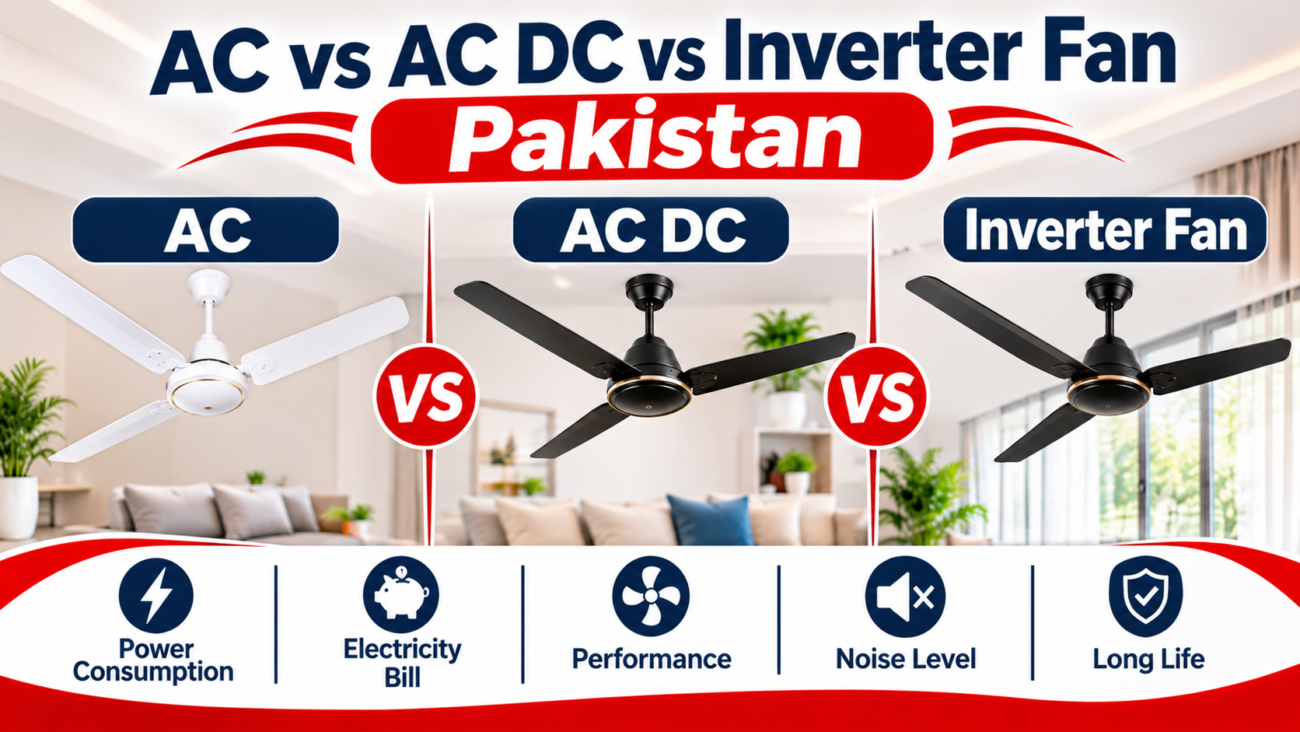
If the AC, AC/DC and inverter labels are confusing, our AC vs AC/DC vs Inverter Fan in Pakistan guide explains the difference in plain terms.
Fusion Eco Smart Models
Three Eco Smart models are listed at Rs. 9,400 each: the Tyrant Model Eco Smart, the King Model Eco Smart, and the Sparkle Model Eco Smart.
Tyrant Model Eco Smart Ceiling Fan, Rs. 9,400
King Model Eco Smart Ceiling Fan, Rs. 9,400
Sparkle Model Eco Smart Ceiling Fan, Rs. 9,400, with the full range in the Fusion Fans shop
All three share the same 30 watt rating, so the choice is mainly about design and finish. For a wider comparison, see Fusion Fans’ Top Ceiling Fans in Pakistan 2026 guide
Warranty: read this before you buy
Fusion Fans states on its product pages that it offers a 3-year warranty on the motors of its inverter fans. Plastic body parts are not covered. Product registration on the website is required to activate the warranty.
Is It Worth the Extra Price?
A 30 watt inverter fan usually costs more to buy than a basic conventional fan. Is it worth it? First, running cost: in Fusion’s homepage example the saving is PKR 2,160 per month for one fan. If your usage is similar, the saving is large; if you run the fan only a few hours a day, it is smaller. Second, number of fans: the saving multiplies with every fan you replace. Third, backup: if you have long load shedding, a fan that runs longer on a UPS is worth more than rupees — it is sleep and comfort.
We have not given a payback figure here, because payback depends on the price difference between the fans, plus your tariff and hours — none of which are fixed. For current prices across the range before you decide, see our Ceiling Fan Price in Pakistan 2026 guide. For most homes that run fans for long hours through a Pakistani summer, the case is strong.
Frequently Asked Questions
What is a BLDC ceiling fan?
A BLDC ceiling fan uses a Brushless Direct Current motor with electronic controls instead of brushes. In Pakistan, BLDC fans are usually the same kind of product as a 30 watt inverter fan.
How many watts does a ceiling fan use in Pakistan?
A conventional ceiling fan typically uses 75 to 120 watts. Fusion Fans uses 120 watts in its homepage comparison. A Fusion Eco Smart fan is rated at 30 watts.
How much electricity does a 30 watt inverter fan save?
In Fusion Fans’ homepage example, a conventional fan costs PKR 3,240 per month and an Eco Smart fan costs PKR 1,080 — a saving of PKR 2,160 per month for one fan in that example. Fusion Fans also states up to 70% energy saving for the Eco Smart range.
How long will a 30 watt fan run on UPS?
There is no single guaranteed figure. Runtime depends on battery size and age, UPS efficiency, and what else runs from the same backup. A 30 watt fan draws one quarter of the power of a 120 watt fan, so the same battery lasts much longer.
Is a 30 watt inverter fan good for solar?
Yes, as a low-load appliance. A 30 watt fan uses far less of a solar system’s stored energy than a conventional fan, so you can run more fans, or run them longer, from the same panels and battery.
Related Reading
- Ceiling Fan Price in Pakistan 2026
- AC vs AC/DC vs Inverter Fan in Pakistan
- Top Ceiling Fans in Pakistan 2026 guide
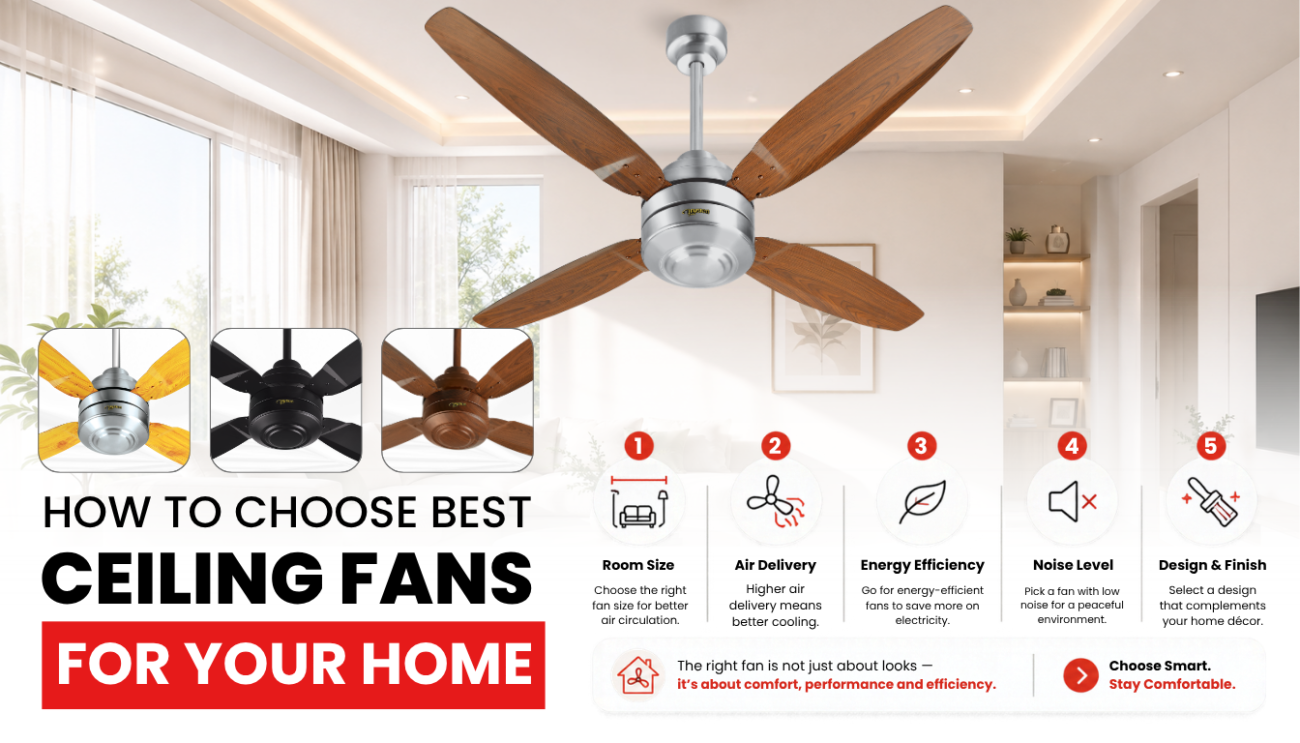
- How to Choose the Best Ceiling Fan for Your Home
Conclusion
A 30 watt inverter fan is not magic, but it is practical for the two problems Pakistani homes face every summer: high bills and load shedding. It uses a quarter of the power of the 120 watt conventional fan in Fusion’s homepage example, is shown there as delivering more air and running more quietly, and places a far smaller load on a UPS or solar system.
If you run fans for long hours, replace the ones you use most first — bedroom, then lounge. Check the Eco Smart models at Rs. 9,400, register the product after buying, and use the Fusion Fans savings calculator for your own estimate. The best time to change is before summer.